



SGB vs Gold ETF vs Mutual funds: The Ultimate Hidden Truths You Need To Know
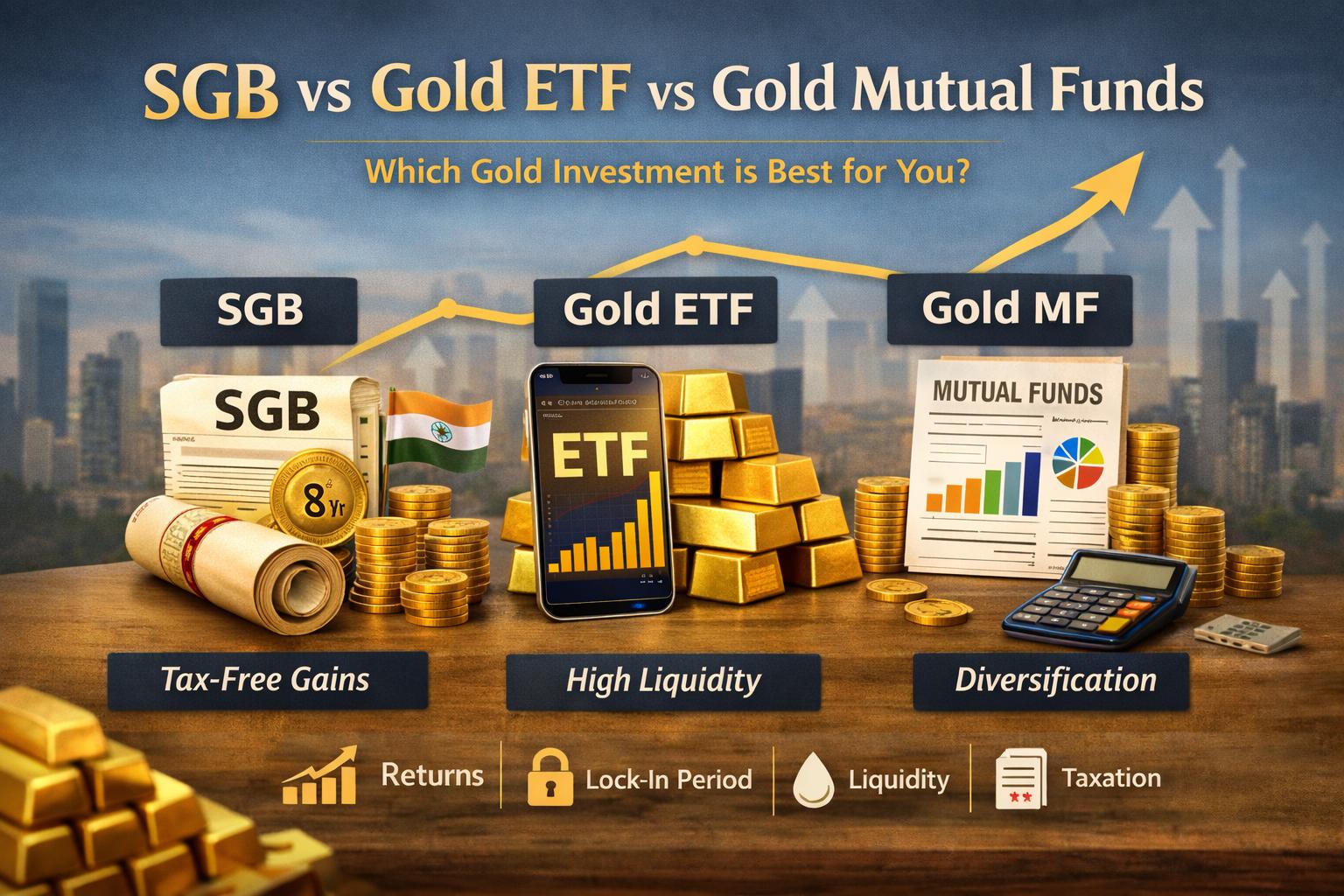
SGB vs Gold ETF vs Gold Mutual Funds is one of the most common comparisons Indian investors make while choosing how to invest in gold. Gold has always played a vital role in Indian households, not just as jewellery or tradition, but also as a dependable store of value. For generations, people have relied on gold during uncertain times because it often holds value when other investments turn volatile.
Today, investing in gold no longer requires storing coins or jewellery in lockers. Digital finance has introduced modern gold investment options such as Gold ETFs, Sovereign Gold Bonds (SGBs), and Gold Mutual Funds. These instruments provide paper or digital exposure to gold, but they differ in returns, liquidity, lock-in period, and taxation. Understanding these differences helps investors make smarter gold investment decisions.
Sovereign Gold Bonds (SGB): Returns, Lock-in Period, and Tax Benefits
Sovereign Gold Bonds offer a secure and government-backed way to invest in gold. The Reserve Bank of India issues these bonds on behalf of the Government of India, which makes them one of the safest gold investment options.
SGBs generate returns in two ways. Investors benefit from gold price appreciation and earn fixed interest of 2.5 percent per year, paid semi-annually. This dual return structure makes SGBs attractive for long-term investors.
SGBs come with an eight-year maturity period. Investors can opt for early redemption after five years on interest payment dates. This structure limits liquidity compared to Gold ETFs. However, SGBs offer a major tax advantage. Capital gains on redemption at maturity remain completely tax-free. Interest income, however, is taxable as per the investor’s income slab.
Gold ETF Investment: Returns, Liquidity, and Taxation in India
A Gold ETF (Exchange Traded Fund) remains one of the most popular ways to invest in gold digitally. Gold ETFs trade on stock exchanges like equity shares. Each unit represents a fixed quantity of high-purity physical gold.
Gold ETF returns move in line with market gold prices. When gold prices rise, ETF values increase accordingly. One major advantage of Gold ETFs is high liquidity. Investors can buy or sell units on any trading day during market hours. Since Gold ETFs have no lock-in period, they suit short-term and medium-term investors well.
Taxation reduces overall returns from Gold ETFs. Investors who sell units within three years pay tax based on their income slab. For holdings beyond three years, long-term capital gains attract a 12.5 percent tax with indexation benefits.
SGB vs Gold ETF vs Gold Mutual Funds: Which Option Works Best?
Each gold investment option suits a different investor profile. Gold ETFs offer flexibility and liquidity, making them ideal for investors with shorter time horizons. SGBs suit long-term investors who want interest income and tax-free capital gains at maturity.
Gold Mutual Funds offer convenience and diversification but carry fund management risk. Investors should align their choice with financial goals, time horizon, and liquidity needs.
Choosing the Right Gold Investment Strategy
No single gold investment option works best for everyone. Long-term investors seeking stability and tax efficiency may prefer Sovereign Gold Bonds. Investors who value liquidity and quick access to funds may choose Gold ETFs.
A balanced strategy often works better. Investors can allocate funds to SGBs for long-term growth while using Gold ETFs or Gold Mutual Funds for liquidity. Regular accumulation through monthly gold investment via SIP can also help build disciplined gold exposure.
Conclusion
In the comparison of Gold ETF vs SGB vs Gold Mutual Funds, each option offers distinct advantages. Gold continues to play a crucial role in a diversified portfolio, even as investment methods evolve. By understanding differences in returns, lock-in periods, liquidity, and taxation, investors can align gold investments with long-term financial goals.
Instead of letting gold sit idle in lockers, modern investors can use smarter gold investment instruments to strengthen long-term wealth creation. Platforms like Dive make this easier by allowing investors to access digital gold investing in a simple, transparent way, helping them build disciplined gold exposure alongside their broader financial plans.
FAQs Regarding SGB vs Gold ETF vs Mutual funds
There is no single best option for every investor. SGBs are ideal for long-term investors seeking tax efficiency and interest income. Gold ETFs suit investors who want high liquidity and market-linked returns. Gold Mutual Funds work well for those who prefer professional fund management without a demat account.
Yes, Sovereign Gold Bonds are government-backed, as they are issued by the Reserve Bank of India. This makes them safer in terms of credit risk compared to Gold Mutual Funds and Gold ETFs, which depend on market mechanisms and fund management.
Capital gains from SGBs are tax-free at maturity, making them highly tax-efficient. Gold ETFs and Gold Mutual Funds attract long-term capital gains tax of 12.5 percent with indexation if held for more than three years. Interest earned on SGBs is taxable as per income slab.
Yes, investors can build gold exposure through monthly gold investment via SIP in Gold ETFs or Gold Mutual Funds. This helps average purchase costs and allows disciplined investing without worrying about short-term price fluctuations.
Gold ETFs offer the highest liquidity, as they are traded on stock exchanges and can be bought or sold during market hours. Gold Mutual Funds provide moderate liquidity, while SGBs have limited liquidity due to their lock-in period.