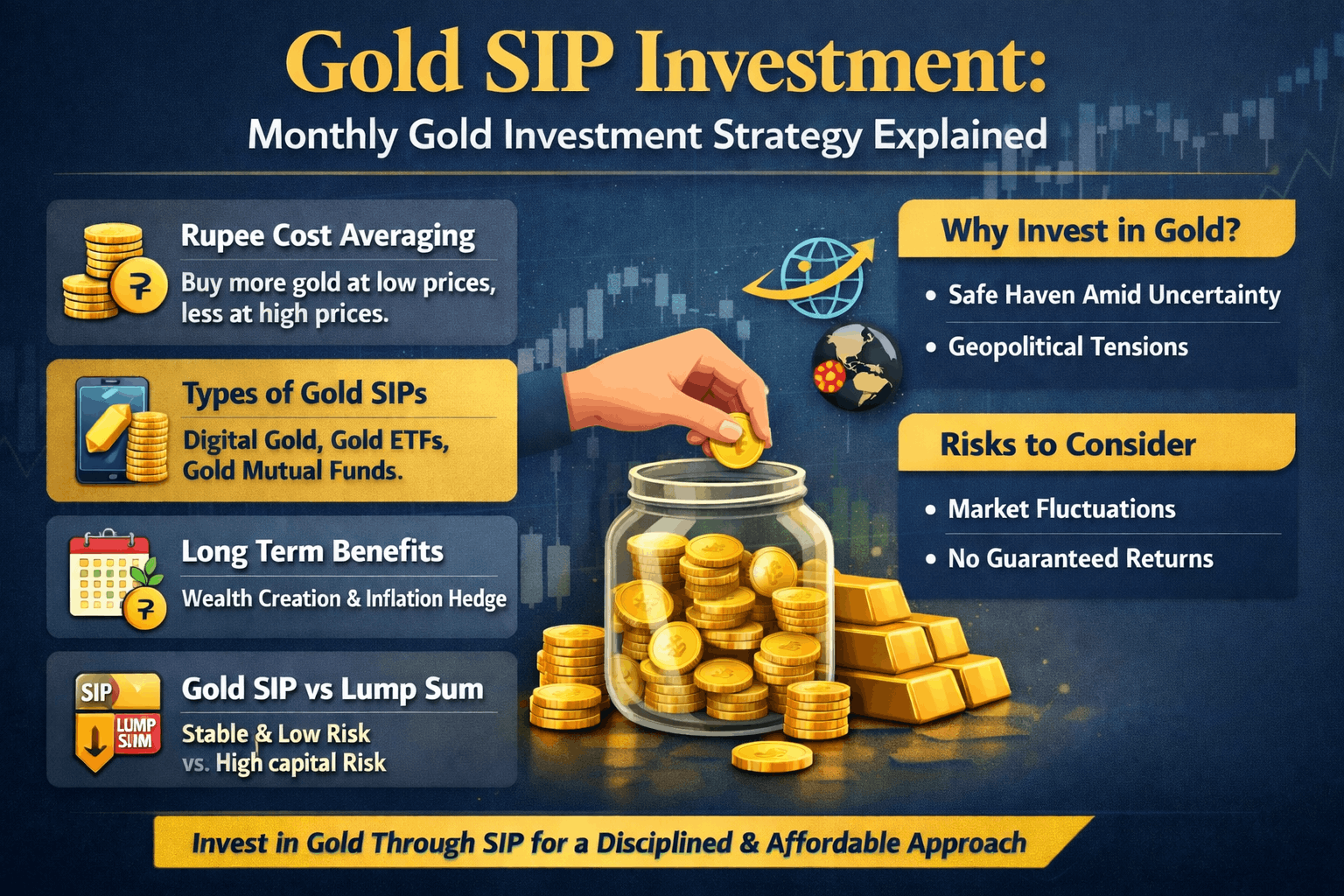



SIP-Powered Wealth: A Simple, Disciplined Way to Build Money

A SIP, or Systematic Investment Plan, lets you invest a fixed amount of money at regular intervals instead of putting in a large sum at once. In simple terms, it helps you automate investing so you stay consistent without worrying about market timing. When markets rise, fall, or move sideways, SIP keeps your investment routine steady and disciplined. This consistency makes it one of the easiest and most effective ways to start investing, especially for people who don’t have the time or confidence to track markets every day.
If stock prices, changing headlines, and constant market noise confuse you, SIP solves that problem by design. Instead of predicting the perfect time to invest, SIP encourages regular investing and long-term thinking.
How SIP Actually Works
Think of SIP like a subscription, but instead of paying for entertainment, you pay for your financial future. When you start a SIP, your bank account automatically transfers a fixed amount at regular intervals-usually monthly-into a chosen investment.
The real strength however lies in its timing neutrality. Markets move through highs and lows constantly. Since in this method people invest at different price levels, one can buy more units when prices drop and fewer units when prices rise. Over time, this process evens out your purchase cost and reduces the emotional stress caused by market volatility.
People often associate SIPs with equity mutual funds, but the concept goes beyond that. SIP simply defines how you invest, not where you invest. Any investment avenue that allows periodic investing can follow this approach including gold, individual stocks or even silver.
Why SIP Matters
Many beginners think risk means losing money. In reality, risk means uncertainty. SIP reduces uncertainty by spreading investments over time. Instead of relying on a single decision that market movements can disrupt as it breaks investing into small, manageable steps.
For working professionals, students, and long-term planners, it removes the pressure of constant monitoring. Once you set it up, it works quietly in the background while you focus on your daily life. This simplicity explains why many first-time investors start their journey with SIPs-it builds discipline without overwhelming them.
Market Volatility
Market volatility remains unavoidable. Prices react to economic data, global events, interest rate changes, and investor behavior. SIP does not eliminate volatility, but it helps you handle it calmly.
When markets fall, fear pushes many investors to stop investing. In reality, continuing it during such phases often improves long-term outcomes because lower prices allow you to accumulate more units. When markets rise, active SIPs ensures you stay invested and benefit from growth.
To understand how volatility impacts performance, investors should also learn concepts like the beta, which can prepare one for volatility.
Common Mistakes Investors Make
SIP looks simple, but investors often misuse it. Many stop theirs during market downturns due to fear, which damages long-term results. Others forget to increase their investment amount as income grows, allowing inflation to slowly reduce their real investment value.
Some investors track returns too frequently. It works best over long periods, and daily or monthly monitoring often leads to unnecessary stress and emotional decisions.
Another common mistake involves misunderstanding SIP itself. It only defines a method of investing. It does not guarantee success. Investing regularly in a poor-quality product with high costs can still lead to disappointing outcomes.
How to Use SIP the Right Way
SIP delivers results when investors pair it with patience and discipline. Instead of reacting to short-term market noise, successful investors stick to their active ones across all market cycles. Periodic reviews matter, but long-term goals should guide those reviews-not temporary performance swings.
As income increases, investors should gradually increase SIP contributions. Even small step-ups help investments keep pace with inflation and evolving life goals.
Most importantly, investors should treat it as a long-term strategy. Wealth creation through this often becomes visible after several years. Compounding strengthens over time and rewards those who remain consistent.
Is SIP the Best Way to Automate Investing?
It may not feel exciting, but it works. It removes emotional decision-making, encourages consistency, and makes investing accessible to almost everyone. It does not promise quick wealth, but it provides a structured path toward long-term financial growth.
Many investors also explore ways to balance their investments across asset types. Platforms like Dive can help you with that for Dive dosent just let you invest in gold but we are launching Mutual Fund baskets very soon as a result now you will be able to diversify your investment into two separate asset types without much fuss and the best part is that you wont even have to do your research as to which fund is performing better or might perform better for that we have our experts who do most of the heavy lifting while you relax.
Final Thought
SIP focuses less on chasing high returns and more on building a habit that lasts. By investing regularly, staying patient during market swings, and avoiding emotional decisions, helping investors move closer to their financial goals without unnecessary stress.
Wealth creation does not require complexity. It requires consistency, time, and the ability to stick to a simple plan. When used correctly, SIP delivers exactly that.
Frequently Asked Questions (FAQs)
A SIP, or Systematic Investment Plan, is a method of investing where you put a fixed amount of money into an investment at regular intervals, usually monthly. Instead of investing a lump sum at once, SIP helps you invest gradually and consistently over time.
No. While SIPs are most commonly associated with mutual funds, the concept of SIP can be applied to many investment avenues. You can use the SIP approach to invest regularly in assets like gold or other long-term investment options that allow periodic contributions.
SIP reduces risk by spreading your investments over time. Since you invest regularly regardless of market conditions, you automatically buy more units when prices are low and fewer units when prices are high. This helps smooth out the impact of market volatility.
Yes. One of the biggest advantages of SIPs is flexibility. You can pause, stop, or modify the investment amount whenever your financial situation changes, without major penalties in most cases.
SIP and lump-sum investing serve different purposes. SIP is better for those who want discipline, reduced volatility impact, and gradual investing, while lump-sum investing may suit those with surplus funds and higher risk tolerance.
Yes, many investors use the SIP approach to invest regularly in gold instead of buying it in one go. This helps average out gold prices over time and makes gold investing more disciplined and accessible.